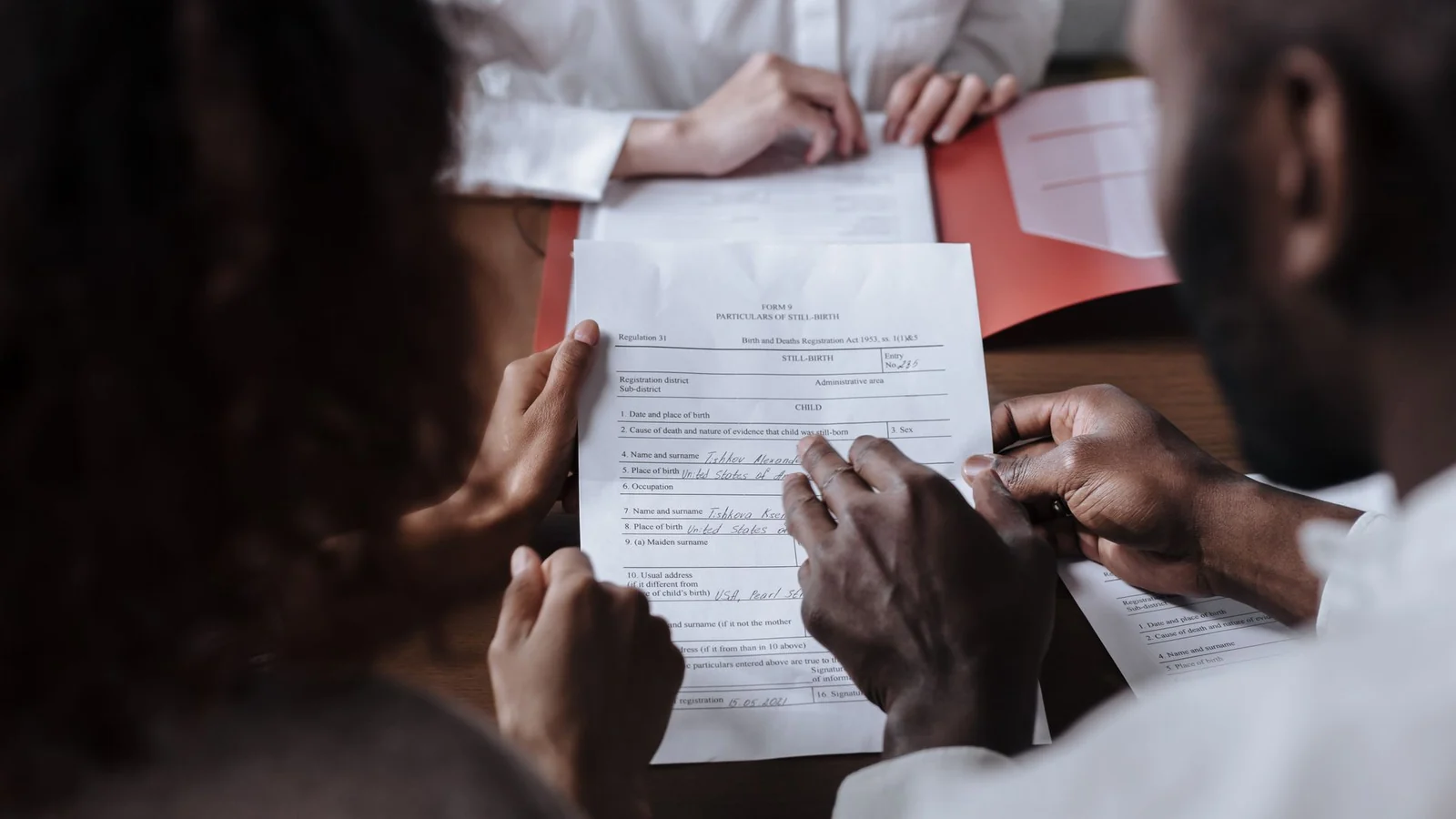
Korea's F-3 dependent-family status generally lets the legally married spouse and an unmarried minor child of a qualifying long-stay foreign resident live with that principal in Korea. It is not a work permit. Before applying, verify the principal's exact visa category, remaining stay period, whether the relationship fits F-3, the household's real housing and financial evidence, and the consulate's requirements in the country where the family applies. A relative who needs to work full-time may need a separate employment status and permission.
The key distinction is a Korean citizen sponsor versus a foreign resident sponsor. If the husband or wife is a Korean citizen, check the F-6 marriage route; F-3 is for specific foreign principal statuses.
Which household qualifies?
| Applicant and principal | First decision | Critical boundary |
|---|---|---|
| E-7 specialist working legally in Korea; legally married spouse abroad | F-3 is a common family category if the principal status and evidence qualify | The spouse may reside, but cannot simply start a paid job |
| D-2 university student with spouse and 6-year-old child | Determine F-3 eligibility, funds and stable family housing; consulate checks apply | The student's tuition admission alone does not fund or approve three residents |
| E-7 worker's unmarried 17-year-old child | Generally a possible minor child F-3 applicant | Once adult, not automatically renewable under the minor-child category |
| Adult 23-year-old child or unmarried partner | Verify another legal family/status category, if any | “Family” does not make every adult dependent an eligible F-3 |
| Principal is a Korean citizen | F-6 spouse/other applicable family rules, not F-3 | Foreign E-7 sponsor and Korean citizen are not interchangeable |
| Principal's stay will expire in two months | Resolve principal's lawful status first, then ask about dependent application timing | The dependent cannot assume a longer independent residence period |
The Korean Embassy's January 2026 F-3 page describes eligible principal categories across D-series study/training/business, E-series professionals and specified F-2 status. The April 2026 embassy F-3 notice specifically lists D-1/D-2/D-4/D-7/D-8/D-9, E-1–E-7, F-2/F-4, with spouse and unmarried under-18 children. Some missions also list D-10 and D-5/D-6; the accepted principal categories are not perfectly uniform across the published consular checklists, so a D-10 principal should obtain a category-specific ruling, not assume a blanket ban or approval.
The evidence that actually decides a family's move
The Korean Embassy in Thailand's F-3 instructions identify items such as the principal's passport and residence card, current employment/income records, marriage certificate for spouse or birth certificate for minor child, actual family residence, financial evidence, visa application and passport photographs. Certified translations and legalisation may be needed for foreign family certificates.
Housing: If the principal rents a home, provide the real lease. For owner-occupied housing use evidence of ownership; for company accommodation ask whether the employer's letter shows a private, suitable place for a family rather than a shared worker dormitory. An embassy can refuse an inadequate proposed household even if the sponsor has an E-7 job.
Finances: Some missions ask for tax-income certificates and withholding statements; if a student has no taxable wage record, they may request a bank balance or a different accepted source of funds. Since 2025, Thailand's mission has published distinct family-housing and financial evidence requirements, with some listed E-category exceptions. Do not import an internet “minimum balance” from a different mission as though it applies nationwide; ask for the actual official checklist at your mission.
Medical/TB and personal documents: The Singapore mission's current F-3 instructions require a TB test in certain applicant situations and describe passport validity, marriage/birth documents and legalisation. The immigration officer may request additional identity/relationship proof. A single omitted apostille or unrecognised certificate can delay the whole family.
A timeline that avoids two expensive mistakes
Mistake 1: confusing the visa's entry window with residence. The 2026 embassy F-3 checklist says a single-entry visa may be usable for three months after issuance, while its initial allowed period of stay may be a year or less in that service. Three months to enter is not the residence period, and actual permitted stay is governed by issued status and the principal's remaining lawful stay. Do not sign a multi-year rental based on the printed visa issuance date.
Mistake 2: assuming the principal's eligibility transfers automatically. A foreign worker has a strong E-7 job and a valid card; the spouse's visa can still be delayed for incomplete relationship, finances or housing evidence. Obtain the dependent's issued visa and travel requirements before purchasing nonrefundable flights. Once arriving for more than 90 days, arrange foreigner registration and later address reports within the applicable category deadlines.
Worked family case: A professor on an eligible E-category holds 16 months of Korean residence remaining. Spouse and two minor children plan a move. The family should prepare three distinct dependent applications, translated marriage/birth records, a housing lease adequate for four people and the professor's actual income/status evidence. Approval and stay lengths may differ for each person. The professor's residence card does not cover all three family members as a group.
Can the dependent spouse earn money?
The Korean Immigration F-3 employment guidance says employment and profit-making activities are prohibited in principle. It lists narrow exceptions in specified teaching/proofreading settings, subject to advance permission to engage in activities outside the status of stay and the correct corresponding employment category. This is not a universal permission for F-3 holders to freelance, drive taxis or work in restaurants.
Example: An F-3 spouse receives a local marketing job offer and is told “just send an invoice because your husband sponsors you.” That is not a safe conclusion. Ask the prospective employer and Immigration whether a proper separate work status or authorised exception applies and obtain permission before any paid tasks. Calling the work remote or paying salary to an overseas account is not by itself a proven exception under the F-3 conditions.
If a spouse wants a regulated teaching role: don't infer that every teaching job fits the narrow exception. Immigration must verify the actual employer, qualification, permitted activity and authorisation in advance. A school job offer alone is not approval.
If your household changes
Principal changes employer or residence category: the family status depends on the principal's qualifying immigration position; ask what needs to be changed/renewed for each F-3 holder. Family splits or a marriage ends: do not assume each dependent keeps a separate unlimited right to stay; request status-specific advice before any expiry. Child turns 18: ask about a different appropriate residence category ahead of time rather than promising indefinite minor-child extensions. Housing becomes unsuitable: document a legitimate new residence and report address changes as required.
The next step today: get the principal's exact D/E/F immigration code and card expiry, gather certified relationship documents, proper family housing and real finances, then use the current Korean embassy checklist for the country of application. If the spouse needs to work, plan a separate authorised employment route before the move, not an imaginary F-3 work entitlement. For related rules read Korea's work/residence guide and residence-card and address changes.